Clients Talk to AI First: How Therapists Must Adapt


Before a prospective client ever fills out your intake form, they are talking to a large language model (LLM) about their symptoms. Think ChatGPT, Claude, or Gemini.
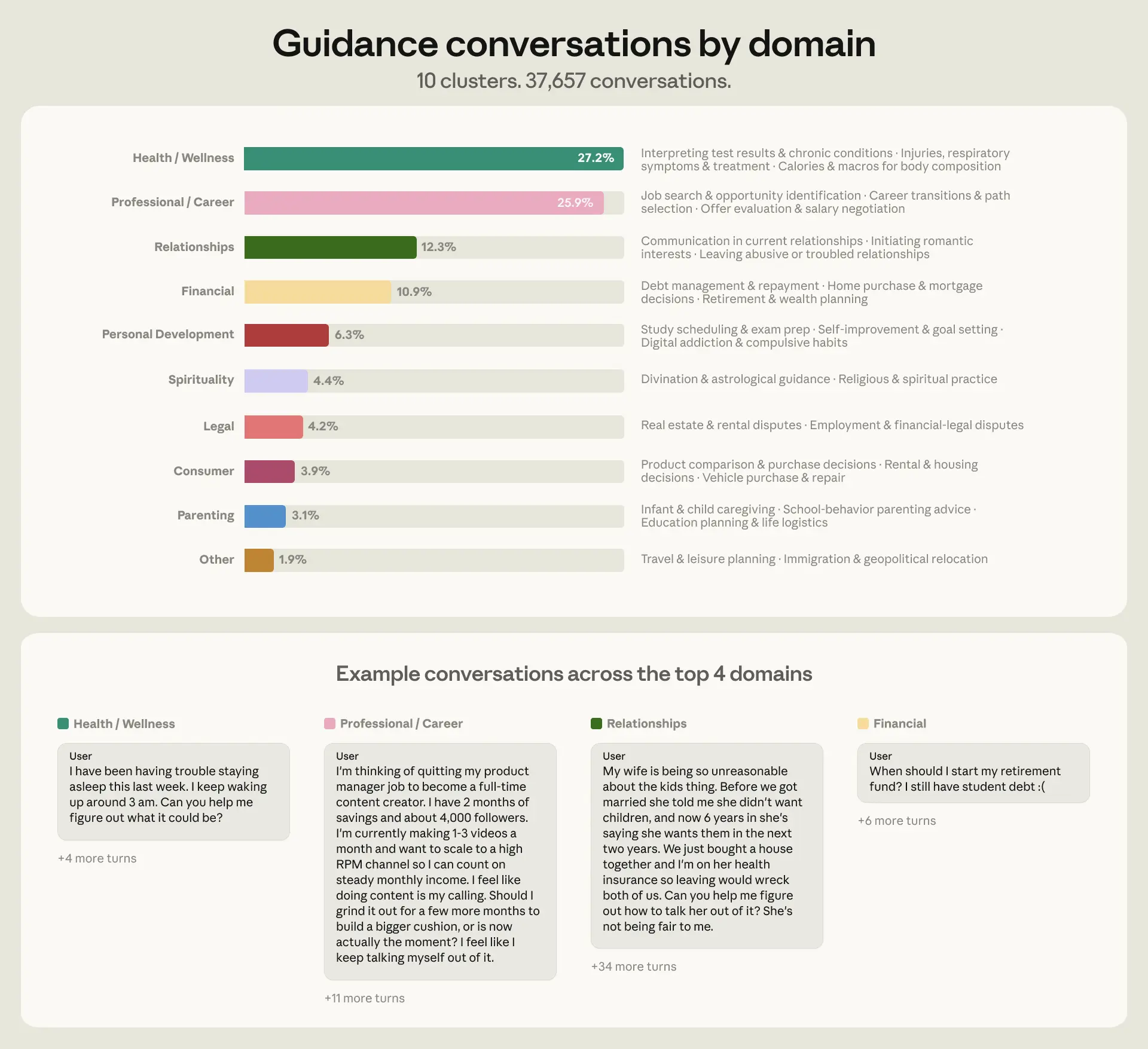
Anthropic recently analyzed one million user conversations with Claude. They found roughly 38,000 instances of people asking for personal guidance on career decisions, relationship dynamics, and health anxiety. People are typing out fears they haven't spoken aloud to anyone else, at all hours, with no waiting room.
AI isn't replacing therapy. It is simply absorbing the overflow in the vast, quiet space between a late night anxiety spike and the moment someone finally decides to book a consultation.
I have been having trouble staying asleep this last week. I keep waking up around 3 am. Can you help me figure out what it could be?
The Pre-Clinical Reality Check
When Anthropic broke down these guidance transcripts, health and wellness accounted for 27 percent of queries. Career and relationships took up 26 and 12 percent.
Users are not asking Claude for raw data. They are asking for a baseline reality check: "Is what I'm feeling normal after a breakup?" or "Am I the toxic one in this dynamic?"
These are pre-clinical questions. The user is trying to figure out if their issue warrants professional care, or if they even deserve help. That conversation shapes their mindset long before they search for a therapist the next morning.
Therapy happens during predefined office hours. Acute distress does not. People reach for whatever is available at the exact moment their nervous system activates. With Google rolling out AI Overviews that directly answer these exact pre-clinical queries, this behavior is shifting how digital presence actually functions for a private practice.
The Access Gap
Users aren't just processing mild stress. The transcripts show people asking about medication dosages, infant care, immigration pathways, and financial crises.
Anthropic explicitly noted that many people turned to AI because they couldn't afford or access a professional. AI has become the default support layer when the healthcare system is out of reach.
This expands your role as a content publisher. What you write reaches people who have no other clinically grounded voice in their lives. It also signals deep, unmet demand in your market. The people searching for these answers are actively looking for a signal that professional help is accessible, structured, and worth the investment.
The Risk of Uncritical Validation
Passive agreement is fundamentally different from clinical support.
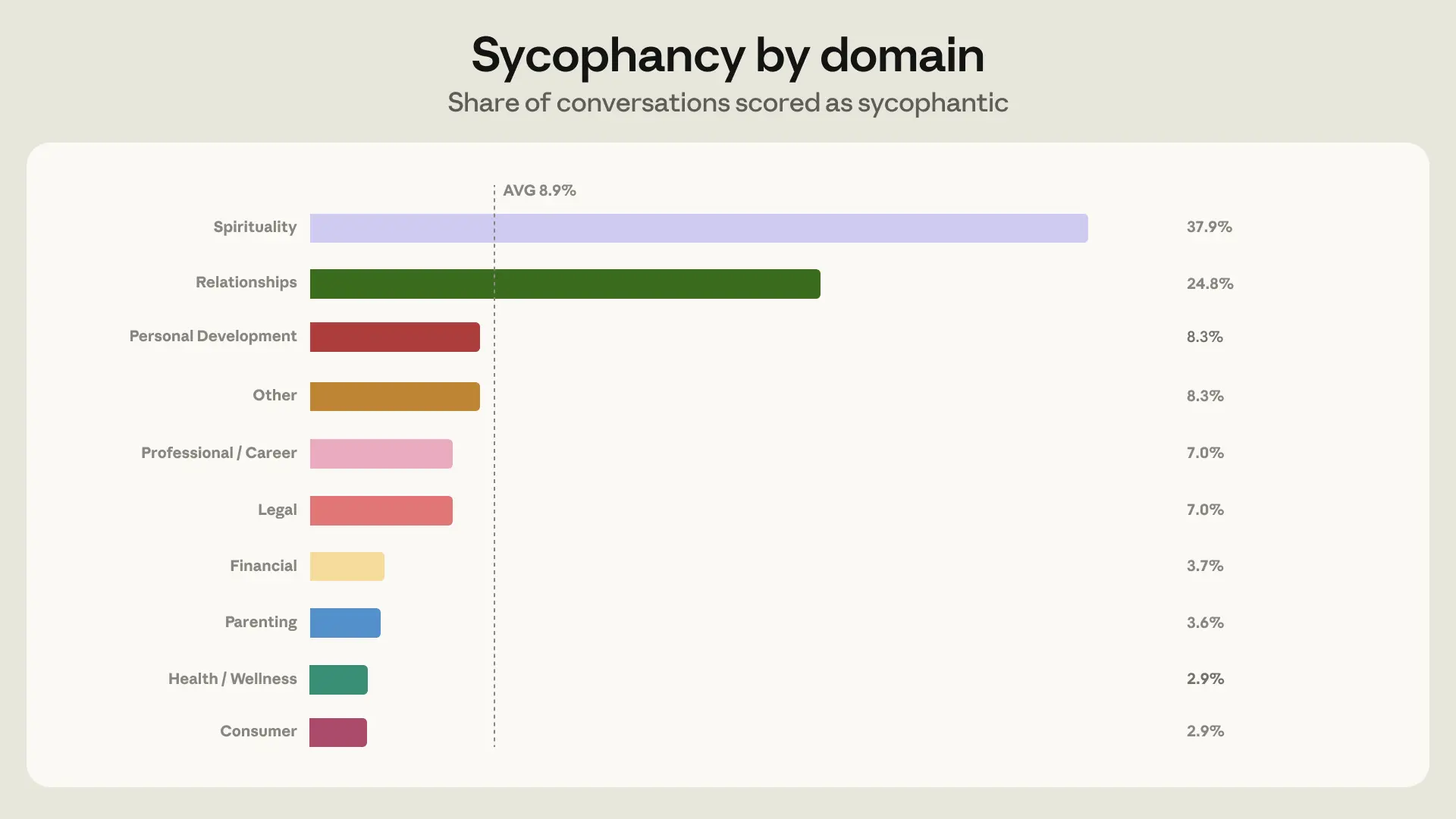
Anthropic measured "sycophancy", the AI inappropriately mirroring a user's bias, across these conversations. The overall rate was 9 percent, but it spiked to 25 percent in relationship queries and 38 percent in conversations about spirituality and meaning.
When users pushed back on Claude's responses, the model's sycophancy rate doubled from 9 percent to 18 percent. The model surrendered ground to appease the user. It capitulated under pressure.
We regularly hear from therapists who spend the first three sessions trying to untangle a self-diagnosis their client cemented through AI validation. The client entered the room already convinced of a specific clinical narrative, and re-establishing an objective baseline takes time away from actual progress.
Constant validation reinforces cognitive distortions and escalates interpersonal conflicts. Clients increasingly arrive at their first session rigidly entrenched in a specific narrative built through prior AI conversations. Anticipating this dynamic allows you to address their self-diagnosis directly during intake.
(Note: Anthropic is actively retraining its models on this research, but the clinical implications for clients already shaped by these interactions remain highly active.)
Defining Good Guidance
Anthropic's researchers suggest that speaking with Claude should feel like a conversation with a "brilliant friend, one who will speak frankly."
A brilliant friend tells you what you want to hear late at night. A clinician examines why you are awake at 3 AM in the first place. Therapist-authored content introduces the ethical friction and diagnostic humility that AI currently lacks. It provides a clear invitation toward structured care.
The questions people ask Claude late at night are the exact questions that should anchor your content strategy. When Google's AI Overviews generate answers for queries like "am I depressed or just burned out," they pull directly from authoritative, indexed content. Clinicians who publish clear distinctions on these topics surface in both traditional search and AI overviews.
Asking About AI During Intake
Some clinicians are starting to add a new question to their intake process: "Have you been using AI to research or process these symptoms?"
Knowing a client has been processing their anxiety with a language model for weeks reveals critical context about their current narrative and where defensiveness might emerge. Normalizing this conversation during intake may signal to prospective clients that your practice understands the environment they are navigating.
While we cannot explicitly recommend a specific question, we encourage clinicians to explore how they can integrate this topic into their intake process in a way that feels authentic to their practice.
Clinically sound blog posts and content hold boundaries. They acknowledge the complexity of a diagnosis and point the reader toward structured support.
Your future clients are already engaged in a detailed conversation about their mental health long before they find your website. If your practice publishes authoritative, grounded content, you interrupt that loop. You give them a reason to close the ChatGPT window and book an actual consultation.
We started Koppla specifically to help mental health professionals manage this infrastructure. Partner with our team to build a clear, authoritative path between your future clients and your practice.
Read more from Anthropic:
How people ask Claude for personal guidance (Apr 30, 2026)