Digital Marketing for Therapists in the AI Era: Your 2026 Visibility Guide


Industry analysts are calling 2026 the year of agents, and this shift is fundamentally changing digital marketing for therapists. AI models like ChatGPT, Claude, and Perplexity are now helping people find mental health professionals by searching the web, checking insurance coverage, and pulling together recommendations in real-time conversations.
Someone experiencing anxiety at work doesn't just search "therapist near me" anymore. They're having full conversations with AI tools, asking questions like "What type of therapy would help with constant worry about my job performance?" or "How do I find a trauma-informed therapist who understands workplace stress?"
These AI systems are pulling information from across the web to answer those questions. And if your expertise isn't part of that conversation, you're invisible to people who need exactly what you offer.
Over the past six months, we've heard a consistent theme from therapists reaching out to us: they're starting to fear they're falling behind. The technology landscape feels like it's shifting faster than ever, and keeping up feels overwhelming when you're already managing a full caseload.
Here's what we tell them, and what we want you to know: this moment of change is actually your opportunity.
Key Takeaways
- AI search rewards what therapists do best: Clear, compassionate explanations of complex mental health topics now outperform keyword stuffing and technical tricks
- Small practices can finally compete: The shift to contextual, human-centered search means your authentic expertise matters more than having thousands of backlinks
- Technical foundations still matter: A well-optimized website remains essential, but now it works in concert with emotionally resonant content rather than replacing it
- The window is open right now: Most therapy directories and large practices haven't adapted to these changes yet, giving you a real advantage if you act now
Why Digital Marketing for Therapists Feels So Overwhelming Right Now
Let's be honest about what's happening. The way people find therapists online has fundamentally shifted, and it happened fast.
Five years ago, the path was straightforward: someone typed "therapist for anxiety near me" into Google, scrolled through results, and hopefully found your practice. You optimized for those searches, built some backlinks, kept your content fresh, and you were visible.
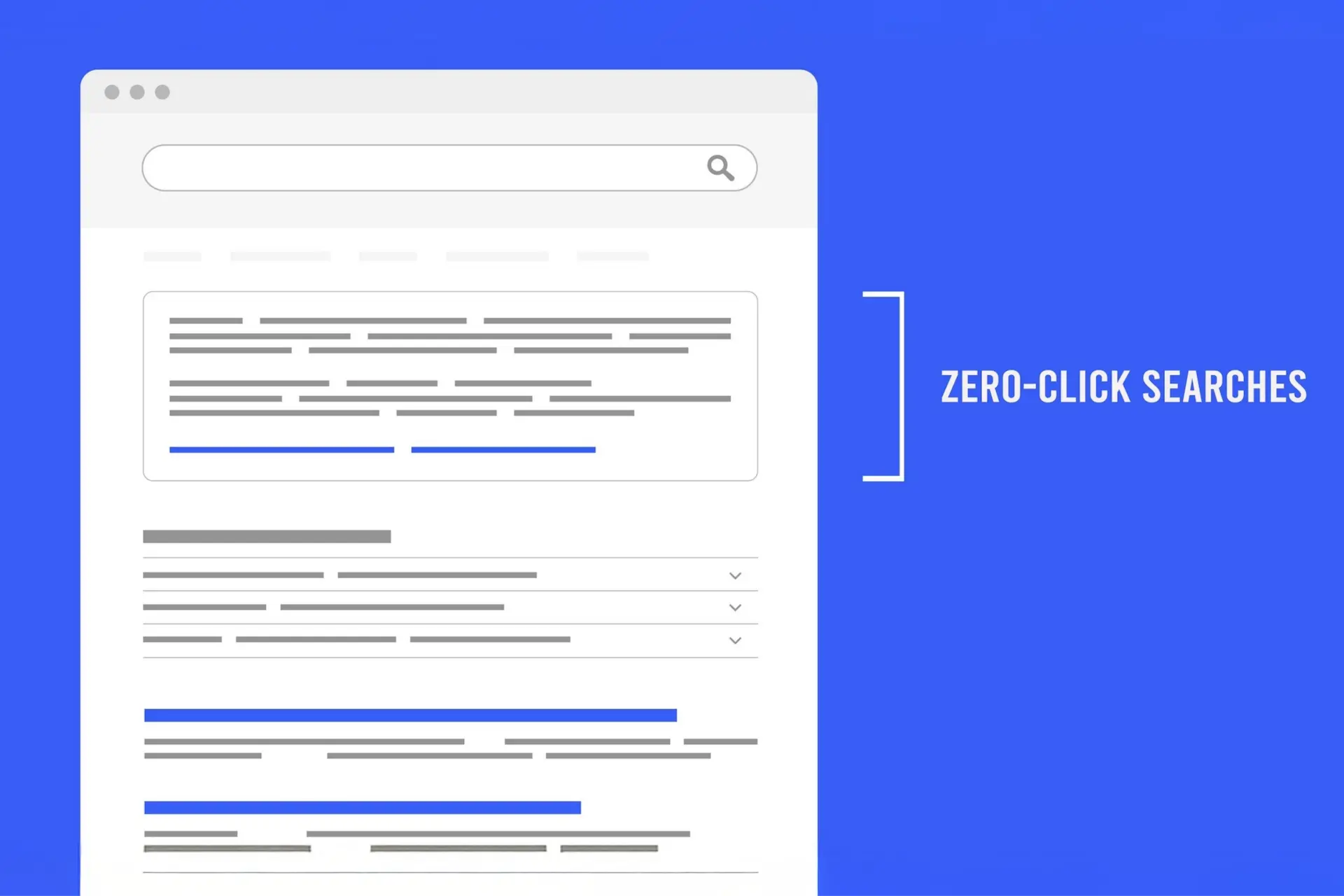
Today, that same person might ask ChatGPT for recommendations. They might read an AI-generated answer directly on Google without ever clicking a link. According to recent data, nearly 65% of Google searches now end without a click to any website. They're using voice search while driving home from work, asking their phone questions in full sentences rather than typing keywords.
The familiar ground shifted, and nobody sent a memo.
The Hidden Opportunity in AI Search for Mental Health Professionals
While many are panicking about AI search and algorithm changes, they're missing the profound opportunity hiding in plain sight: search engines are finally rewarding the kind of content therapists are uniquely positioned to create.
For years, SEO for mental health professionals favored websites that played technical games. Large therapy directories won because they had thousands of pages and endless backlinks, not because they provided better information. Corporate mental health platforms dominated search results because they could afford to game the system, not because they understood what someone in crisis actually needed to read.
That's changing. And it's changing in your favor.
According to research published by Princeton University and IIT Delhi, websites that focus on clear, authoritative, well-structured content can improve their visibility in AI-powered search results by up to 40%, even if they don't have the traditional ranking factors that used to matter most.1
What does that mean in plain language? Your authentic expertise is becoming more valuable than technical tricks.
The Two Foundations of Effective Mental Health SEO
The Koppla approach to digital marketing strategy centers on two interconnected foundations. Neither one works without the other, but together they create something powerful.
Foundation One: Technical SEO That Works Like a Clinical Interview
Think about how you conduct an intake session. You create structure. You ask the right questions in the right order. You make sure the person sitting across from you feels understood and guided, not overwhelmed or confused.
Your mental health website needs to do the same thing.
Technical optimization is about structure and clarity:
When search engines (including AI systems) visit your website, they're trying to understand what you offer and who you can help. If your site structure is confusing, if pages load slowly, if your information is buried in complicated navigation, these systems can't do their job. More importantly, neither can the person looking for help when they need it most.
This is what we mean by technical optimization for therapist websites:
- Site architecture that makes sense to both humans and search engines. Clear navigation paths that answer the question "Can this therapist help me?" within seconds. Service pages organized by what people are struggling with, not just by therapy modalities.
- Page speed that respects urgency. When someone is searching for mental health support, every second of load time increases the chance they'll leave. According to Google research, as page load time increases from one to five seconds, the probability of a mobile visitor bouncing increases by 90%. Even a one-second delay in mobile load times can impact conversion rates by up to 20%.2
- Mobile optimization that meets people where they are. Most mental health searches now happen on phones. Google uses mobile-first indexing, which means your mobile experience directly affects whether you show up in search results at all.3
- Local SEO that connects you to your community. Twenty percent of searches include location terms. If you practice in Sacramento, you need to be visible when someone in Sacramento searches for help. This means optimizing your Google Business Profile, building local citations, and creating content that speaks to your specific community's needs.
- Schema markup and structured data. These technical elements help search engines (and AI systems) understand exactly what services you offer, what insurance you accept, and what specialties you provide. Think of it as making sure your intake forms are filled out completely.
None of this is glamorous, but it's essential. Even the most emotionally resonant content in the world won't help if search engines can't find it, understand it, or deliver it to the people who need it.
Foundation Two: Content Marketing That Connects With Human Experience
Now we get to the part that actually matters most—and the part where you have a genuine advantage.
Here's what changed: search algorithms are increasingly sophisticated at understanding context, nuance, and emotional resonance. AI systems evaluate content based on whether it actually helps people, not just whether it contains the right keywords in the right density.
This is revolutionary for mental health content.
Keywords still matter, but context matters more.
Let's talk about someone searching for help with anxiety. Five years ago, you'd optimize a page for "anxiety therapist" and hope for the best. You'd include that exact phrase multiple times, maybe throw in some variations, and cross your fingers.
That approach isn't dead, but it's incomplete.
Today's search systems understand that someone typing "I can't stop worrying about everything" is asking the same question as someone searching "anxiety treatment options." These algorithms recognize that "my chest gets tight and I feel like I can't breathe" connects to panic attacks even if those exact words aren't in the search query.
This means you need to write to the actual human experience, not just to keyword targets.
What this looks like in practice:
- Instead of writing a blog post titled "Anxiety Treatment Options in Sacramento" that mechanically lists different therapy modalities, you write "Why Your Anxiety Feels Like It's Taking Over Your Life (And What Actually Helps)."
- Instead of cramming your target keyword into every paragraph, you use the natural language that your clients use in session. You write about "that feeling when your thoughts won't stop racing at 3 AM" rather than repeatedly saying "racing thoughts anxiety symptom."
- You structure content around the questions people actually ask when they're struggling, not "What is Cognitive Behavioral Therapy?" but "Will therapy really help if I've been anxious my whole life?"
This is where emotional resonance comes in.
People don't search for therapy when everything is fine. They search when they're hurting. When they're scared. When they've tried everything else and nothing worked. When they're finally ready to ask for help but terrified to make the call.
Your content needs to acknowledge that reality. Not in a manipulative way, but in an honest, compassionate way that says "I understand what you're going through, and there's a path forward."
How These Foundations Work Together
Here's a real example from our work with a therapist in New York.
Her website had good technical SEO. Pages loaded fast, navigation was clear, local optimization was solid. But her content read like a clinical textbook. Service pages listed qualifications and modalities without connecting to what someone with PTSD actually experiences. Blog posts explained EMDR mechanics without addressing why someone would choose it.
She was visible in search results. She just wasn't getting inquiries.
We kept all the technical optimization but transformed her content to speak to human experience:
- Her EMDR page changed from "Evidence-Based Treatment for Trauma and PTSD" to "What to Expect When Traumatic Memories Won't Let Go." We kept the clinical information, the credentials, the explanation of the treatment, but we led with recognition of what her ideal client was experiencing.
- Her blog shifted from explaining therapy techniques to answering the questions her clients asked in consultations: "How do I know if what I experienced counts as trauma?" "Why does my body still react this way even though it happened years ago?" "What if I can't handle remembering what happened?"
Within six months, her consultation requests increased by 60%. More importantly, the quality of inquiries improved. People weren't just looking for "a therapist who does EMDR." They were reaching out because they felt understood.
This is what we mean when we say these foundations work together:
Technical optimization makes sure the right people can find your content. Emotional resonance makes sure they feel safe enough to reach out. Neither one replaces the other. Both are essential.
Why This Moment Matters for Online Marketing for Therapists
Large therapy directories haven't fully adapted to this shift yet. They're still optimizing primarily for keywords and backlinks because that's what worked before. Many corporate mental health platforms continue creating broad content designed to rank for high-volume searches, but this approach often lacks the specificity that connects with someone looking for a particular type of help.
You have a window of opportunity right now.
AI search systems and modern algorithms favor content that demonstrates genuine expertise applied to real human experiences. These systems reward clear structure combined with authentic voice. They elevate content that actually helps people over content that just checks SEO boxes.
Important: Google's latest Search Quality Rater Guidelines emphasize that mental health content falls under "Your Money or Your Life" (YMYL) standards, meaning it's held to higher quality requirements because it can significantly impact people's wellbeing.4 This actually benefits licensed mental health professionals who create evidence-based, expert content.
You're already trained in the core skills this requires. You understand human psychology. You know how to explain complex concepts in accessible language. You've spent years learning to meet people where they are, understand their experience, and guide them toward healing.
The challenge isn't your expertise. It's knowing how to translate that expertise into online visibility. That's where we come in. We help you take what you already know and structure it in ways that both search systems and vulnerable people can find and connect with.
The only difference now is that these skills translate directly to online visibility.
Your Practical Path to Better Mental Health SEO
We're not suggesting you need to become an SEO expert or a content marketing specialist. You became a therapist to help people heal, not to spend your evenings optimizing meta descriptions.
But you do need to understand that the rules have changed in your favor, and that taking action now will compound over time.
Start with your foundation:
- Audit your website's technical health. Is it fast? Does it work perfectly on mobile? Is your local SEO properly configured?
These are the foundational elements that determine whether people can find you at all. At Koppla, we specialize in building and optimizing websites specifically for mental health professionals. We understand both the technical requirements and the ethical considerations that make therapy websites unique.
The investment in getting your foundation right pays for itself in increased visibility and better-qualified leads. - Optimize your Google Business Profile. This single asset drives more local discovery than almost anything else, yet most therapists leave it half-configured or outdated.
It's an essential part of the work we do because we've seen firsthand how proper Google Business Profile optimization transforms local visibility. When someone in your area searches for the help you provide, your profile needs to show up and show them exactly why you're the right choice. - Transform your content approach.
This is where many therapists get stuck. They know they need content, but creating it consistently feels overwhelming. That's exactly why we built our approach around helping mental health professionals create content that connects. Learn more about building a sustainable content strategy that doesn't burn you out.
Here's what we focus on when working with clients:
- Write for people, not algorithms. We help you create content that speaks to the person who needs your help at their most vulnerable moment. That person is your audience. When your content connects with them authentically, search systems naturally find it and elevate it.
- Use keywords naturally. If you're writing about anxiety treatment, terms like "managing anxiety," "coping with worry," and "feeling anxious all the time" will appear organically when you're writing about real experiences. We guide this process to ensure you're hitting the right mental health SEO keywords without forcing awkward phrasing.
- Answer specific questions with clear, compassionate expertise. We help you move beyond generic statements like "Anxiety is a common mental health condition that affects millions of Americans" to content that resonates: "When anxiety takes over your life, every decision feels overwhelming. Here's why that happens, and what we can do about it together."
- Structure content for both humans and AI. Clear headers, logical sections, scannable formatting. These elements help real people navigate your expertise and help AI systems understand and share your content appropriately.
For therapists who want these capabilities in their own hands, we've built KopplaHQ, a platform designed specifically for mental health professionals. It provides AI-powered content creation tools that understand therapy specialties, access to peer-reviewed research, and content scheduling—all in one place. Whether you work with our agency team or use the platform yourself, the goal is the same: get your expertise in front of the people who need it.
Most importantly, remember this:
You don't need to optimize for every possible search query. You don't need to appear in every AI overview. You don't need to compete with every therapy directory in your state.
You need to be visible to the specific people you're best equipped to help. That's it. And the current moment in search technology makes that more achievable than it's been in years for independent practices.
Measuring Digital Marketing Success for Therapists
Koppla measures success differently than most digital marketing agencies. While website traffic numbers matter and give us important data about visibility, the metric that truly matters is whether those visitors are reaching out for consultations. A thousand visitors who leave immediately tells a very different story than a hundred visitors who spend time reading your content and then fill out your contact form.
What we track:
- The quality of inquiries increases. When your online presence combines technical visibility with emotionally resonant content, you attract people who already feel some connection to your approach. They're not just looking for "any therapist". They're looking for you specifically.
- Consultation requests grow steadily. Not overnight, but consistently. Month over month, you notice more of the right people finding you at the right time. See how one therapist increased website traffic by 10x through this exact approach.
- You spend less time explaining basics. When people reach your contact form or call your office, they already understand your approach because your content did the educational work. Initial consultations become more about fit and logistics, less about convincing them that therapy can help.
- You feel less anxious about technology changes. Because you're focused on the fundamentals that won't change—technical accessibility combined with genuine human connection. When the next algorithm update or AI advancement happens, you're positioned to benefit rather than scrambling to catch up.
This is what Koppla clients experience when they get these foundations right. Their practices don't just survive the changes in online search—they thrive because of them.
The Bottom Line on SEO for Mental Health Professionals
Every few years, something significant changes in digital marketing. The teams with the most resources and sophisticated technology will eventually adapt, as they always do. But there's a window between when changes happen and when the largest players catch up.
Right now, we're in that window.
The shift toward contextual, human-centered search creates real advantages for solo practitioners, small group practices, and mid-size therapy organizations. It rewards the qualities you already have: deep expertise, authentic communication, the ability to connect with people in vulnerable moments.
Large directories and corporate platforms can't replicate your voice. They can't match your understanding of the specific people you serve. They can't fake the kind of genuine expertise you bring to every piece of content you create.
You just need to make sure you have the technical foundation in place so search systems can find your expertise, and then create content that demonstrates that expertise in emotionally resonant ways.
One of our clients, a trauma therapist, came to us with exactly this concern. She felt like she was doing everything right but worried the ground was shifting underneath her. Working with Koppla to implement these foundations over six months, we cleaned up her technical SEO, optimized her local presence, and transformed her content from keyword-focused to human-focused.
Her search visibility increased. More importantly, her consultation requests doubled. And the quality of those consultations improved dramatically because people were finding her for the right reasons.
There's no better time than now to make sure your practice shows up where people are actually searching. Not because the technology is simpler—it's not. But because for the first time in years, the technology rewards exactly what therapists do best.
You just need to step into that opportunity.
Frequently Asked Questions About Digital Marketing for Therapists
How is AI search different from traditional Google search for therapists?
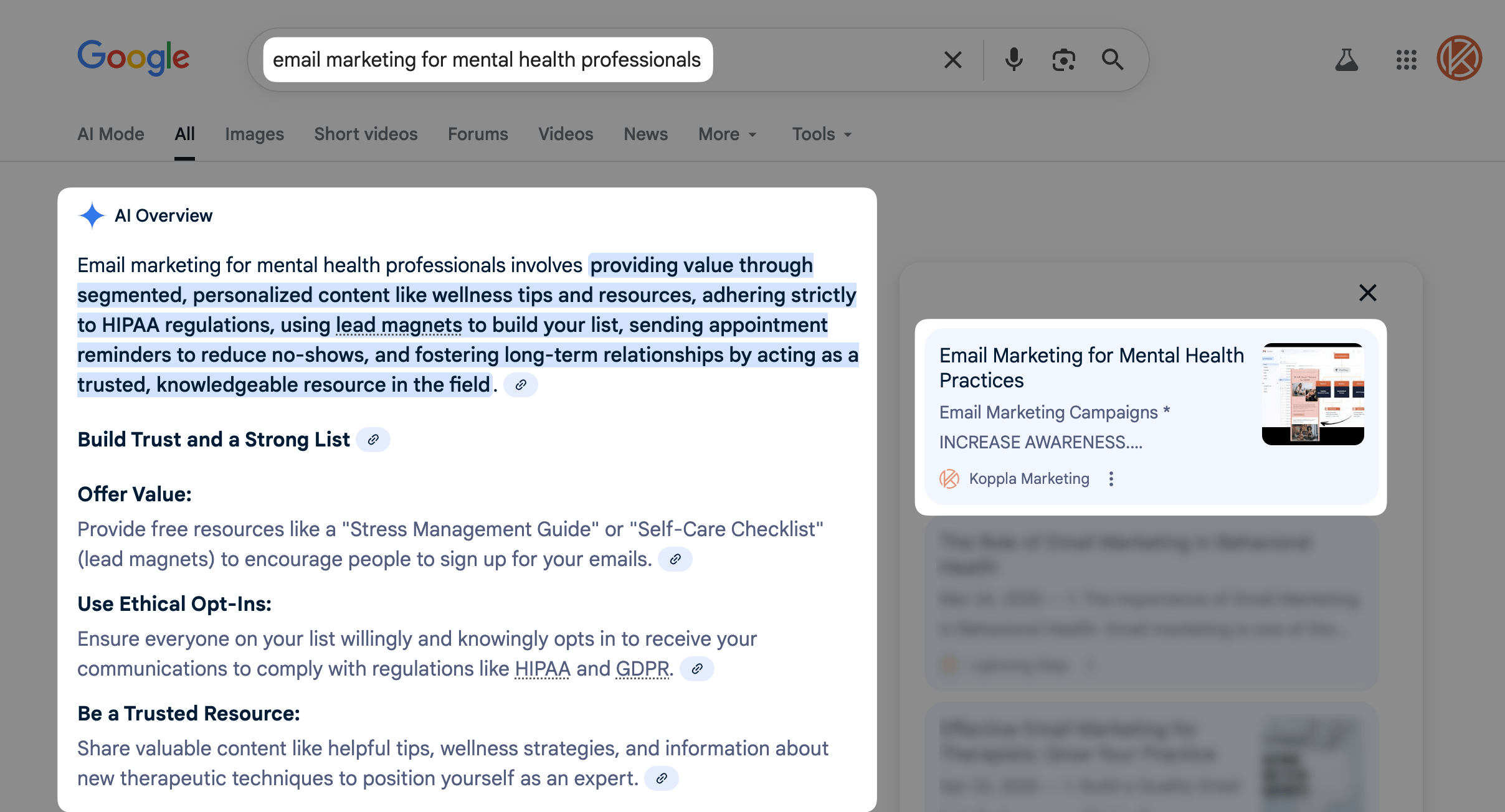
Traditional Google search shows a list of websites based on keywords and backlinks. AI search systems like ChatGPT and Google's AI Overview synthesize information from multiple sources to provide conversational answers. For therapists, this means your content needs to be clear, comprehensive, and authoritative enough to be selected as a source for these AI-generated responses.
Do I need to completely change my marketing strategy for AI search?
No. The fundamentals remain the same: create valuable content, optimize your technical SEO, and build trust with potential clients. What's changed is that AI search rewards authentic expertise and clear explanations over keyword manipulation. If you're already creating helpful content that genuinely serves your ideal clients, you're ahead of most competitors.
How long does it take to see results from SEO for mental health professionals?
Most therapy practices see measurable improvements within 3-6 months of implementing a comprehensive SEO strategy. However, the most significant gains often come after 6-12 months as your content library grows and your domain authority builds. The key is consistency—practices that publish regular, high-quality content see compounding returns over time.
Is local SEO still important if AI is changing search?
Absolutely. Local SEO remains critical for therapy practices because most clients prefer working with someone nearby. Optimizing your Google Business Profile and local citations helps you appear when someone searches "therapist near me" or "anxiety counseling in your city"—queries that remain extremely common.
What's the most important thing I can do right now to improve my online visibility?
Start with your Google Business Profile. It's free and has immediate impact on local visibility. Make sure it's complete with accurate information, professional photos, and regular updates. Then audit your website for mobile responsiveness and page speed. These foundational elements determine whether potential clients can even find you before you can impress them with your content.
Ready to Build Your Online Visibility the Right Way?
At Koppla Marketing, we specialize in helping mental health professionals navigate the changing landscape of online visibility. We understand both the technical foundations and the human-centered content strategies that actually work in 2026. Explore our complete approach to digital marketing for mental health professionals.
We've spent thousands of hours building specialized tools and strategies specifically for therapy practices. This includes our full-service agency work and KopplaHQ, our platform that puts professional content creation tools directly in therapists' hands.
KopplaHQ provides AI-powered content generation built specifically for mental health professionals, access to peer-reviewed research, content planning and scheduling, and performance tracking. All designed to help you create the kind of emotionally resonant, clinically grounded content that connects with both people and search systems.
Schedule a free consultation or contact us directly to explore how these strategies can work for your specific practice and specialty.
Sources
Footnotes
- Aggarwal, P., Murahari, V., Rajpurohit, T., Kalyan, A., Narasimhan, K., & Deshpande, A. (2024). GEO: Generative Engine Optimization. Proceedings of KDD 2024. https://arxiv.org/abs/2311.09735 ↩
- Think with Google. (2018). Mobile page speed new industry benchmarks. https://www.thinkwithgoogle.com/marketing-strategies/app-and-mobile/mobile-page-speed-new-industry-benchmarks/ ↩
- Google Search Central. (2023). Mobile-first indexing is here. https://developers.google.com/search/blog/2023/10/mobile-first-is-here ↩
- Google. (2025). Search Quality Rater Guidelines. Section on YMYL (Your Money or Your Life) content standards for health-related topics. ↩